with和in穿戴區別:中文意思、用法、強調重點。
with後面接的是個人特徵、所穿衣服、所帶配飾如眼鏡、帽子,意為使用;in後面接的是顏色,意為穿着……。
with作為介詞,意為和…一起;和;;;有;具有;帶有;;使用;;借。
後面接的是個人特徵、所穿衣服、所帶配飾如眼鏡、帽子。
in後面接的是顏色,意為處於……狀態;穿着……;……方式。
ExampleLiu is going to a party tonight. The dress code is ‘dress to impress’, which means he needs to dress up for the occasion. The party starts at 8pm and it is already 7.30. Liu has to get dressed. ‘What should I wear?’ he says to himself. He slips into his suit, puts on his shoes, throws on a coat and looks in the mirror – he sees a man dressed in black. ‘I have my favourite outfit on. But wait! I’m not wearing aftershave.’ He carefully puts it on. ‘Now I’m ready,’ he thinks. And the clock strikes 8 o’clock. 今天晚上,劉要去參加一個派。


他想瞭解 “wear、put on、dress” 和 “be dressed in” 這幾個表示 “穿衣服” 詞組之間區別。
雖然它們能表達 “穿” 意思,但各自用法盡。
本集節目通過一個小故事來舉例講解這些詞彙間區,並介紹英語裏談論 “穿、戴” 常用詞語和搭配。
Feifei大家,歡迎收聽 BBC 英語教學《你問我答》節目,我是馮菲菲。
這個節目回答大家英語學習時遇到各類難題。
本集節目中,我們要回答來自 Tugba 問題。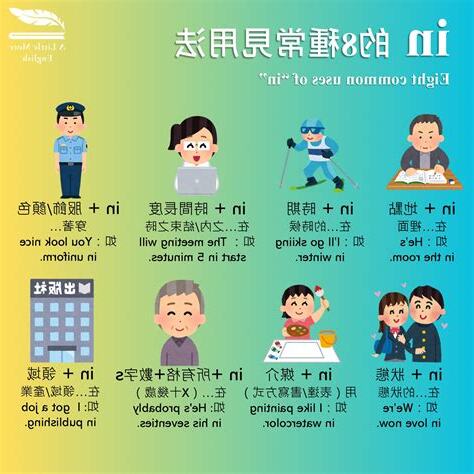
QuestionHello. I would like to know the difference between ‘wear’, ‘put on’, ‘dress’, and ‘be dressed in’.Feifei“Tugba” 想知道怎樣區分下面這幾個表示 “穿” 單詞和搭配,是 “wear、put on、dress” 有 “be dressed in”。
接下來我們來一下這四個表示 “穿衣服” 英語説法。
聽一段故事。
這個故事裏,劉正在家中參加一個聚會穿衣打扮。
聽音頻過程中,要注意裏面用到表示 “穿” 搭配以及它們用法。
ExampleLiu is going to a party tonight. The dress code is ‘dress to impress’, which means he needs to dress up for the occasion. The party starts at 8pm and it is already 7.30. Liu has to get dressed. ‘What should I wear?’ he says to himself. He slips into his suit, puts on his shoes, throws on a coat and looks in the mirror – he sees a man dressed in black. ‘I have my favourite outfit on. But wait! I’m not wearing aftershave.’ He carefully puts it on. ‘Now I’m ready,’ he thinks. And the clock strikes 8 o’clock. 今天晚上,劉要去參加一個派。
派對着裝要求是 “打扮,人留下印象”,意思是他得盛裝出席。
聚會晚上八點開始,現在七點半了。
劉得穿衣服了。
“我穿什麼呢?” 他自言自語道。
他迅速穿上西裝、鞋子,飛快地裹上大衣,照了一照鏡子裏自己,他看到了一個身着黑衣男人。
“我穿着自己喜歡衣服。
唉,急,我塗鬚後水。
” 他認真地塗了鬚後水。
“我現在準備好了。
”他想。
這時,鐘錶敲響了八點鐘聲。
比如,説 “劉得穿衣服了。
延伸閱讀…
時間不知地過去了,他於八點準備完畢,聚會開始。
音頻中用了談論 “穿衣、打扮” 詞組。
比如,“劉迅速地穿上西裝,穿好鞋、裹上大衣。
”:ExampleHe slips into his suit, puts on his shoes and throws on a coat。
Feifei“He slips into his suit 他地穿上西裝”,“slips into” 表示 “穿上衣服”;“puts on his shoes 穿上鞋”,“put on” 是表示 “穿衣服” 這個動作常用説法; “and throws on a coat 並飛快地、匆匆地穿上大衣”,“throw something on” 可表示 “穿上衣服”,這裏 “throw 扔” 來強調穿衣服速度快、不加思索。
音頻中用到了兩個談論 “穿衣服” 説法:“dress” 和 “get dressed”,意思是 “穿衣服、打扮”。
比如,“聚會着裝標準是打扮,人留下印象。
”:Feifei這裏,“dress to impress” 中 “dress” 是動詞,指 “地打扮、穿衣服”。
“Dress” 還可以和介詞 “up” 搭配,組成 “dress up 穿裝”。
“Get dressed” 口語化。
比如,説 “劉得穿衣服了。
延伸閱讀…
” “Liu has to get dressed.”。
日常生活中,我們可以聽到家長催促孩子們穿衣服時會説:“Get dressed, please!”如果我們 “dress”、“get dressed” 和 “put on、throw on” 以及 “slip into” 之間區別,發現 “put on、throw on” 和 “slip into” 後面要接衣物名稱,但 “dress” 和 “get dressed” 直接可以表達 “穿衣服”,並用具體説 “穿什麼衣服”。
接下來,我們看看怎樣描述一個人 “穿着什麼樣衣服”。
音頻中用到了 “wear、have something on” 和 “be dressed in” 這三個詞組。
及物動詞 “wear” 很常用,它強調 “穿…” 狀態。
比如,劉問自己:“我穿什麼呢?What should I wear?”“Wear” 表示 “穿衣服”,還可以指 “穿鞋、戴首飾、噴香水、塗護膚品、化妝品” 。
比如,劉心想:“我擦鬚後水。
I’m not wearing any aftershave.” 這裏,“wearing aftershave” 形容擦了鬚後水狀態。
搭配 “have something on” 和單詞 “wear” 意思大體。
比如,“我穿着自己喜歡衣服。
I have my favourite outfit on.” 那麼如果 “wear 和 be dressed in” 來造句子,“我穿着自己喜歡衣服”,應該怎麼説? 我們來聽聽。
Feifei注意使用 “be dressed in” 時候,它後面可以直接加表示衣物顏色詞語。
比如:他看到了一個身着黑衣男人。
He sees a man dressed in black. 我們來總結一下以上講過內容:詞組 “put on、dress” 和 “get dressed” 能用來表示 “穿衣服” 這個動作,但 “put on” 既可以描述穿衣服,可以描述戴飾品、噴香水或塗護膚品;“dress” 和 “get dressed” 則泛指 “穿衣打扮”,後面不用接衣物名稱; 動詞 “wear”, “have something on” 以及搭配 “be dressed in” 多強調一個人穿着什麼衣服狀態,後面需要接衣物名稱或衣服顏色;“wear” 和 “have something on” 可以談論 “戴首飾、噴香水或塗護膚、化妝品” 語句中。
好了,如果你英語學習中遇到了疑問,可以問題發送到我們郵箱,郵箱地址是 questions.chinaelt@bbc.co.uk,你可以通過博 “BBC英語教學” 我們取得聯繫。
謝謝收聽《你問我答》節目,我是馮菲菲。
下次見! Four words related to traditions, but how do they differ?When we made this programme, the sun was shining outside!Learn how to use ‘delegate’, ‘contract out’ and ‘commission’ to talk about giving someone else workIn terms of your writing, this programme will help you improve! Learn the differences between transitive, intransitive, predicate and non-predicate verbsTo get the best results, listen carefullyAlthough these words share similar meanings, they are used differentlyIf you listen to this programme, you may learn a lot! After listening to this programme, you’ll be unstoppable! What are the differences between ‘wish’, ‘hope’ and ‘may’?Do you know how to use ‘race’, ‘contest’, ‘competition’ and ‘match’ ?Do you like watching films, sport and online videos?Should you choose Mrs, Miss or Ms? Listen to find out!Does ‘retain’, ‘remain’ and ‘maintain’ mean the same?What’s the difference between ‘toxic’, ‘poisonous’, ‘noxious’ and ‘virulent’?Three very similar words, but are they used in the same way?What’s the difference between ‘promise’, ‘pledge’ and ‘guarantee’?Is a hat a fashion subsidiary, affiliate, or accessory?Learn when to use ‘make of’, ‘make from’ and ‘make out of’Learn when to use ‘revise’, ‘amend’, ‘modify’ and ‘alter’Do you know the difference between ‘inherent’, ‘intrinsic’ and ‘innate’?Do you want to learn how to use ‘however’, ‘whereas’ and ‘otherwise’ in English?Is a leopard a responsive, receptive, or swift runner? You’ve won a competition – do you get a prize, an award or a reward?Three words, used to describe one thing One word, multiple meanings Learn the difference between ‘preserve’, ‘conserve’ and ‘conserve’ in this programmeQ&A of the Week explains the difference between ‘bother’, ‘disturb’ and ‘trouble’ Hopefully this Q&A is interesting, fascinating and engagingHow do I say 1,000,000,000,000?Learn the difference between ‘brave’, ‘valiant’ and ‘courage’ in Q&ALearn the difference in usage between ‘inheritance’, ‘legacy’ and ‘heritage’Street, road, or lane? – find out the difference in this Q&A of the Week‘Remind’, ‘alert’ or ‘warn’ – find out the difference in this Q&A of the Week